Showing posts with label The Atlanta Opera. Show all posts

Monday, March 14, 2016

Behind the Scenes: Curt Olds as Major-General Stanley

Bass Curt Olds is a world-renown singer and performer. He's covered many roles in Gilbert & Sullivan's greatest works, most recently in our mounting of The Pirates of Penzance. We went backstage with Curt to watch his transformation into the Major-General and to learn more about his process, pre-performance rituals and tips for getting into character.

I always hate the process of putting on heavy wigs and makeup for a production, but I love the look afterwards. The adhesive, spirit gum or mastix, is sticky like syrup and burns a bit upon application. I performed for a couple of years in the Broadway musical CATS, which was probably the heaviest make-up/wig show I've ever done. One trick I use as Major-General is to split the mustache into two pieces so it will allow my mouth to move without trouble. 


The Major-General is unique because your biggest song is both your first moment on stage and extremely well known. When arias like this come right out of the gate for a character (like Figaro in The Barber of Seville) the performer has one shot to get things right. Patter songs (I do many of them in the repertoire I perform) are always demanding, but the Major-General's song is extra hard due to it's fame and it's location in the show. 

No matter what role I am performing, I like to take a little time in my dressing room before I get into costume and makeup and go through the whole show at a quick pace. I usually keep all my notes together that I have been given by directors, conductors, and coaches, and I go through that list, as well. With the Major General, I usually have time to run the lyrics to the song one more time before my entrance, which I always think is a smart idea. No matter how many times I do a role, I still review using this method to make sure I am not taking anything for granted. Every time I review, there is something that I catch that might have been missed in performance.

I'm a big coffee drinker, so I usually will grab a cup of coffee as I head to the theatre. I also like to stay social, so when time allows, I like to prop my dressing room door open so I can keep in the vibe of the show, visit with colleagues and wish them well. I started out as many performers do, working in cramped-quarter theatres and I like to keep in the group frame of mind with Gilbert & Sullivan, which requires a connection from the largest role to every ensemble member for success.

This is my 15th production of Pirates (8 Pirate Kings and 7 Major Generals). Next up I will do my 24th production of Ko-Ko in Mikado, which is my favorite role of all. I love this rep so much and I am happy to see opera and theatre companies include it in standard rep. Despite it being viewed as a guilty pleasure by so many opera patrons, it usually sells out and many times companies add performances because of demand. That speaks volumes. 

It's been such a pleasure to perform with Atlanta Opera and I have had a great time in this city. This cast includes some of my very close friends and I think Tomer Zvulun has assembled a brilliant group of singing actors perfectly suited for this type of show. I look forward to see what exciting things are coming for Atlanta Opera audiences and I hope I have the opportunity to return again soon.


All photos by Vicky Legaspi. 

Usage of any images on this blog is restricted to The Atlanta Opera and approved news websites. Any other usage, particularly for professional purposes, must have written permission. For additional information, please contact The Atlanta Opera at 404.881.8801.

Tuesday, August 4, 2015

Winter Journey (Winterreise)


Our 2015-16 season opens with a theatrical version of Franz Schubert’s famed song cycle Winter Journey (Winterreise). This opera is a romantic journey that includes two cycles of songs telling the story of unrequited love, written by Schubert in 1827. The piece has the dramatic and emotional effect of a full opera when sung by a great singer and accompanied by a theatrical, visually arresting production. Here's a bit of what you can expect to see: 


This production is essentially an “illustrated” Winter Journey, in which the audience is brought into the emotional world of the poet. The projection-mapped set acts as a self-contained landscape that transforms completely from song to song; sometimes guiding the narrative by suggesting time, place, and environment; and sometimes drawing the audience into a symbolic world of the poet’s thoughts and emotions. The video content consists entirely of moving images - no still images are used.


Baritone David Adam Moore sings the title role of the poet who treks through the winter night. Creative direction by GLMMR, the creative team of David Adam Moore and Vita Tzykun.


Click here to learn more and purchase tickets. We look forward to seeing you there!

All photos: Denny Wells

Usage of any images on this blog is restricted to The Atlanta Opera and approved news websites. Any other usage, particularly for professional purposes, must have written permission. For additional information, please contact The Atlanta Opera's Marketing Department at 404.881.8801.

Friday, June 19, 2015


Usage of any images on this blog is restricted to The Atlanta Opera and approved news websites. Any other usage, particularly for professional purposes, must have written permission. For additional information, please contact The Atlanta Opera's Marketing Department at 404.881.8801.
Jumping back to 1999 with Jocelyn Dorsey on WSB's fantastic People 2 People segment. She spoke with Matthew Lau and Kevin Bell who performed in that season's production of Samson and Delilah. Iconic voices, but the style? What can we say - it was the 90's.


Usage of any images on this blog is restricted to The Atlanta Opera and approved news websites. Any other usage, particularly for professional purposes, must have written permission. For additional information, please contact The Atlanta Opera's Marketing Department at 404.881.8801.

Tuesday, March 27, 2012

Come "Escape the Ordinary" with The Atlanta Opera

By Ellen Sturgill

Last night at our Season Snapshot event, The Atlanta Opera proudly presented the three mainstage operas of the 2012-2013 Season. They are... drumroll please...


With fiery gypsies, tragic love stories, and a comedy for the ages, Atlanta audiences can expect to be transformed, transfixed, and transported through these well-known and loved operas.

With this exciting season announcement, who better to give our readers a look at why these operas were chosen and what to expect than our Zurich General Director, Dennis Hanthorn.  Below is a Q&A with Dennis as he presents a first-look at the 2012-2013 season.  Enjoy!

1.  The theme for this season is “Escape the Ordinary.”  How does this theme speak to the opera experience?  Why do you think this theme represents the three operas of the season, and how does it relate to Atlanta audiences? Each of the three operas has something exotic, yet familiar in it.  Carmen is one of the most exciting, entertaining, passionate operas ever written. There are so many characters that audience members can, or would like to, associate with! Maybe audiences will place themselves in Spain, and imagine what it would be like to be a soldier, or a gypsy.  

In La traviata, the high society of Paris before the French Revolution had an elegance to it, with all the parties and excitement of meeting ambassadors, dignitaries, and friends from the world. Violetta was a woman who knew people in high places, and the opera depicts a very glamorous time to live in Paris. 

We’ve decided to set our production of The Italian Girl in Algiers in the 1930’s.  We also added another element by changing the shipwreck accident into a plane crash. With Isabella in a plane crash rather than a shipwreck, you have this “Amelia Earhart-like” quality: where does she land, how, etc.  

Italian Girl in Algiers is also unique in the opera world because it turns the table on the traditional “rescue opera.” In this production, the woman is the hero.

For each of these operas, there is an excitement in the unknown and exotic locations, and we hope this will allow Atlanta audiences to “Escape the Ordinary”.  We also hope that new audiences will “escape the ordinary” by trying an opera experience for the first time.  Each of these operas are great introductions for first-timers!  

2.  Why did you choose Carmen, La traviata, and The Italian Girl in Algiers for the 12-13 season? Carmen is one of the four all-time great operas- including Aida, La bohème, and Don Giovanni- that people want to see.  It is incredibly popular and contains music that people can hum along to.

Out of Verdi’s 28 operas, La traviata is one of his most famous and most performed operas.  2013 is also the bicentennial year of his birth, so it is exciting to commemorate Verdi’s life with a production of one of his operas.  

With both Carmen and La traviata being grand and serious operas, we are excited to end our season with The Italian Girl in Algiers, Rossini’s comic opera.   This opera is one of Rossini’s three most performed operas, and will be a debut production for The Atlanta Opera.  It promises to be a fun experience for the audience, as well as a look into a great 19th century bel canto work.

3.  The Atlanta Opera has produced Carmen and La traviata before.  How will these productions be different?  Both Carmen and La traviata were traditional productions in our past seasons. The Atlanta Opera also owns both productions. This season’s Carmen and La traviata will be traditional, as well.  That being said, the personnel involved will be different, and with new directors, conductors, and performers comes new interpretations.    


4.  The Atlanta Opera will be producing The Italian Girl in Algiers for the first time. Why has it taken 30+ years for The Atlanta Opera to produce this Rossini comedy? There certainly has been a large gap in the history of Rossini repertoire that has been produced here at the Opera.  Between our first production of The Barber of Seville, and our most recent production of it in 2006, there was this gap of almost 20 years were no Rossini work was produced.  However, in my eight seasons at The Atlanta Opera, we have produced The Barber of Seville, Cinderella, and now, Italian Girl.

I particularly love Rossini’s music, and there are singers today who specialize in singing Rossini very well.  I am excited that we have identified some of them for Italian Girl.  Atlanta audiences can expect a high level of talent and delightful performances.  

5.  Describe the concept for The Italian Girl in Algiers.  How does setting the opera in the 1930’s change the characterization? When changing or updating a production, you still must remain true to the original direction and characterization of the opera. Isabella, Lindoro, and Mustafà (to name a few characters) will retain their original qualities.  Yet the time and place will be different.  Changing the period of the piece adds a fresh perspective to both performers and audiences alike, as well as lending itself to the exotic feel we are capturing with this 2012-2013 season.  

Audiences can also look forward to a different type of stage craft with this production of Italian Girl.  Instead of a standard set, with pieces moving in and out, our opera will be performed in a storybook set.  The stage will have the feel of a pop-up children’s story, which will bring a lot of whimsy and fantasy to the opera. 

6.  Each opera in the 12-13 season contains a very powerful and iconic female role.  What can Atlanta audiences expect from Maria Jose Montiel as Carmen, Mary Dunleavy as Violetta, and Sandra Piques Eddy as Isabella?  Atlanta audiences can expect a very authentic portrayal of Carmen in Maria José Montiel.  Because of her native Spanish culture, her interpretation is believable, and she is able to bring a special flavor to the performance. Maria is in high-demand, and performs in Europe, as well as all over the U.S.  We are looking forward to having her sing on our stage in her Atlanta Opera debut. 
Photo courtesy of Maria José Montiel.
Mary Dunleavy has performed Violetta many times around the world. This is one of her signature roles.  This production will also be her debut with us. I’m just so pleased and proud to bring her to Atlanta. She is a tremendous actor and musician, and gives a very exciting interpretation of Violetta.  She will thrill our audiences.

Photo courtesy of Mary Dunleavy.
Sandra Piques Eddy sang the role of Cherubino in our 2008 production of The Marriage of Figaro, and we are pleased to have her back. She is a consummate artist as far as Rossini and classical repertoire goes.  She performs many styles of opera-  romantic, late 19th and 20th century- but thoroughly understands the Rossini style and technique. Sandra is also one of the great mezzos of our day.  
Photo courtesy of Sandra Piques Eddy. 
7.   The 11-12 season received some criticism about the decision to produce The Golden Ticket?  Why do you think this opera was effective in our season and to the Atlanta Opera’s growth as a company? Opera companies across America have the responsibility to produce a balanced season.  Choices are also made based on how much money you can raise, and while producing what’s called the war horse operas (opera classics) may seem the only option, audiences will grow tired.  

There are traditional, contemporary, early music, and new operas that our audiences have not seen.  It is one of our goals to provide as broad a variety as possible.  And while doing that, we know that not all audience members are going to like everything. 

However, The Golden Ticket had a tremendous effect and positive response from our younger audiences.  One of our favorite reviews was from a 13-year-old boy in the audience who wrote an excellent article of his experience for Macaroni Kid. He stated that the production was “creative, colorful, and really inventive.”  This is the kind of feedback that we were hoping for. We also had a large amount of first-timers to the opera, and we are optimistic that these people will want to come back.  As an opera company, we have to think of ways to bring in a new audience, and while many of our more traditional audience members questioned why we included it in our season, The Golden Ticket delivered in terms of building new audiences. 

8.  What are you most looking forward to in the 12-13 season? We are looking forward to broadening our audience.  Ticket sales only make up a portion of direct production costs, so we are also hoping to grow in the amount of contributions.  But simply put, I am excited to produce the highest quality opera possible and to know that audiences enjoyed the performances! 


Production dates are as follows:  Carmen will be on November 10, 13, 16, and 18, 2012; La traviata occurs March 2, 5, 8, and 10, 2013; and The Italian Girl in Algiers runs April 27 and 30, and May 3 and 5, 2013.

Wait… there’s more!

The “season snapshot” also included the announcement of a donor benefits program called MyOpera, a completely new approach to issuing donor benefits in the world of the performing arts; 2012-2013 community engagement initiatives, including the hugely successful 24-Hour Opera Project and High School Opera Institute; and the details of the 2012 Atlanta Opera Ball: A Night in Seville, a fundraiser supporting and sustaining the exceptional artistic quality of The Atlanta Opera.
You can read more about these initiatives in our 2012-2013 season press release.

This season promises to be unlike any other. Subscriptions are available here.


We hope you’ll join us to:


Usage of any images on this blog is restricted to The Atlanta Opera and approved news websites. Any other usage, particularly for professional purposes, must have written permission. For additional information, please contact The Atlanta Opera's Marketing Department at 404.881.8801.

Friday, March 2, 2012

Sneak Peek of The Golden Ticket

By Ellen Sturgill

Get ready, Atlantans, because tomorrow, you will finally get your chance to see the inside of Willy Wonka's factory! The Atlanta Opera's second production of the season, The Golden Ticket, premieres tomorrow night, and it promises to be a performance like no other.  With dazzling visual effects, spectacular costumes, larger-than-life characters, beautiful music, and chocolate (lots of it), Roald Dahl's classic story comes to life in this modern operatic adaptation of Charlie and the Chocolate Factory.


If you can't wait until tomorrow to witness this spectacular affair, have no fear. With photos from last night's final dress rehearsal, we're giving readers a first look at what they can expect from this exciting opera. Enjoy!

Daniel Okulitch (left) plays Mr. Know/Willy Wonka, and Ruben Roy (right) performs the role of Charlie Bucket in the Atlanta Opera’s production of The Golden Ticket, March 3-11, 2012 at the Cobb Energy Center. © Tim Wilkerson

From left to right- Tenor Keith Jameson (Grandpa Joe), mezzo-soprano Jamie Barton (Grandma Joesephine/Mrs. Teavee), Ruben Roy (Charlie Bucket), baritone Jason Hardy (Grandpa George/Mr. Beauregard), and soprano Kristin Clayton (Grandma Georgina/Mrs. Gloop) in the Atlanta Opera’s production of The Golden Ticket. © Tim Wilkerson

Soprano Ashley Emerson (Violet Beauregard), and tenor Andrew Drost (Augustus Gloop) describe how they won their Golden Tickets to soprano Krista Kostin (Candy Mallow). © Tim Wilkerson

Veruca Salt, mezzo-soprano Abigail Nims, finally gets her way winning a Golden Ticket, with the help of her father Lord Salt, sung by baritone David Kravitz . © Tim Wilkerson

Charlie Bucket (Ruben Roy) finds his Golden Ticket. © Tim Wilkerson


Willy Wonka (Daniel Okulitch) describes his factory to Mike Teevee (Gerald  Thompson), Charlie Bucket (Ruben Roy), Veruca Salt (Abigail Nims), and Augustus Gloop (Andrew Drost). © Tim Wilkerson

Willy Wonka finally opens the gate to his factory! © Tim Wilkerson


Augustus Gloop, tenor Andrew Drost, over-indulges in the chocolate river. © Tim Wilkerson

Gerald Thompson as Mike Teevee in The Golden Ticket. © Tim Wilkerson

Veruca Salt (Abigail Nims) gets punished by the Squirrel chorus and Oompa Loompas  in the Atlanta Opera’s production of The Golden Ticket, March 3-11, 2012 at the Cobb Energy Center.
With the Oompa Loompas assisting, Willy Wonka (Daniel Okulitch) and Charlie Bucket (Ruben Roy) take off  in Wonka's elevator. © Tim Wilkerson
The cast of The Golden Ticket celebrate Charlie's good fortune as he starts his new life as the owner of the chocolate factory. © Tim Wilkerson
Want to see The Golden Ticket in person? Get your tickets on our website, or call 404.881.8885.

Usage of any images on this blog is restricted to The Atlanta Opera and approved news websites. Any other usage, particularly for professional purposes, must have written permission. For additional information, please contact The Atlanta Opera's Marketing Department at 404.881.8801.

Friday, February 24, 2012

Behind the Scenes of The Golden Ticket

By Ellen Sturgill

Mark your calendars! In a little over a week, The Atlanta Opera will be presenting one of the most fanciful operas it has ever produced.  The Golden Ticket opens on Saturday, March 3rd, and Atlanta audiences will be in for a treat – and we don’t just mean chocolate.

True to Roald Dahl’s classic children’s story Charlie and the Chocolate Factory, the opera centers on the antics of four bratty children, one sweet child, and a zany confectioner.  Since its publication in 1964, this classic story has withstood the test of time –  inspiring two movies, enchanting both scholars and children alike, and garnering a devoted, if not fanatical, following. In the newest installment of Wonka-lore, The Golden Ticket combines one of the most fantastical plots in literature with the stunning art form of opera.

You may be wondering how it could be possible to translate a story as complex as Charlie and the Chocolate Factory into an opera.  Therefore, for this week’s blog, we thought we’d give our readers a sneak peek into how this happens. The rehearsal photos, sketches, and behind-the-scenes interviews below will show you what to expect at the premiere Saturday, March 3rd at the Cobb Energy Performing Arts Centre. Enjoy!


© Cherokee Rose Productions


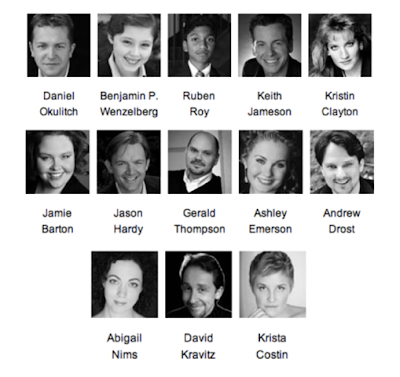
The characters of Charlie and the Chocolate Factory are iconic, but this opera takes a different spin on some of the characters: four of the roles include adult opera singers portraying children. Having Augustus Gloop, Violet Beauregard, Mike Teevee, and Veruca Salt performed by adults gives them a larger-than-life quality, and creates a dramatic distinction between the one good child in the opera.  Charlie Bucket will be sung by boy sopranos Benjamin P.Wenzelberg and Ruben Roy, and their pure, clear voices add to the honesty of Charlie's character.

Of course, one cannot think of Road Dahl's classic without including the fantastic, the magnificent, the incredible... Willy Wonka.  Reprising this role from the world-premiere of The Golden Ticket in 2010 with the Opera Theatre of Saint Louis is bass-baritone Daniel Okulitch.  In his Atlanta Opera debut, Daniel's Willy Wonka is zany, yet with a timbre as rich as Wonka's famous chocolate.

Pictured below is the cast and creative team of The Golden Ticket, as well as rehearsal photos.


Willy Wonka (Daniel Okulitch), and Charlie Bucket (Bejamin P. Wenzelberg). © Jeff Roffman
Boy soprano Ruben Roy sings as Charlie Bucket, with Willy Wonka (Daniel Okulitch) observing. © Jeff Roffman 
Composer Peter Ash instructs Daniel Okulitch in a rehearsal.  © Jeff Roffman
Willy Wonka (Daniel Okulitch) is confronted by a very demanding Veruca Salt, sung by soprano Abigail Nims. © Jeff Roffman
Things aren't looking good for Violet Beauregard (Ashley Emerson). © Charles Wenzelberg
From far left to right, Jason Hardy, Benjamin P. Wenzelberg, Abigail Nims, Gerald Thompson, Jamie Barton, and Keith Jameson react to Violet Beauregard's unfortunate mishap. © Charles Wenzelberg
Stage Director Michael Shell observes a rehearsal.  © Charles Wenzelberg
Countertenor Gerald Thompson rehearses the role of Mike Teavee. © Charles Wenzelberg
Looks like trouble between Violet Beauregard (Ashley Emerson), and Veruca Salt (Abigail Nims). © Charles Wenzelberg
Though the process took years, composer Peter Ash and librettist Donald Sturrock created an opera that evokes the enchanting world of Willy Wonka.  Check out this interview with Peter and Donald to get the inside scoop on how The Golden Ticket came to be.


© Cherokee Rose Productions

Bringing Roald Dahl's characters to life also involves creative costumes.  Shown below are some original costume sketches designed for Opera Theatre of St. Louis.


This opera is sure to delight audiences of all ages.  Take a look at the video below for reviews of its world-premiere.  If you haven’t already purchased your tickets, there is still time!  Visit our webpage for more information, or call The Atlanta Opera Ticket Office at 4043.881.8885 to get your ticket for this extraordinary opera


Usage of any images on this blog is restricted to The Atlanta Opera and approved news websites. Any other usage, particularly for professional purposes, must have written permission. For additional information, please contact The Atlanta Opera's Marketing Department at 404.881.8801.

Friday, February 10, 2012

Q&A with Adam Cannedy, Oompa Loompa Aficionado

By Ellen Sturgill

Everyone has heard of Roald Dahl’s classical book Charlie and the Chocolate Factory. But people may not know that composer Peter Ash and librettist Donald Sturrock took this iconic story, and turned it into a larger-than-life opera.  The Atlanta Opera is excited to bring The Golden Ticket to our stage this March.  If you love chocolate, beautiful music, and Oompa Loompas, this opera is for you.  


To give readers an inside scoop on what being a part of this innovative opera is like, this week’s blog features a Q&A with baritone Adam Cannedy.  Adam has been in the past two productions of The Golden Ticket, once in the world premiere with the Opera Theatre of Saint Louis in June 2010, and later at the Wexford Festival Opera in October of 2010.  As someone who has a great deal of personal experience with this opera, Adam shares why working with Peter Ash was exciting, and yet intimidating, and why creating the characterizations of the first “big” Oompa Loompas is something he’ll never forget. Enjoy! 


1. What was it like being a part of the world premiere of The Golden Ticket? Working on the world premiere of The Golden Ticket was rewarding and daunting at the same time.  When I received the score, all we had to reference was an electronic sampling of the music, which really meant we were starting from a blank pallet.  I remember working on the music for hours in the practice room trying to figure out where I would find the notes, how the harmonies fit together, etc.  It took a lot of time, but it was worth it.  This wasn't my first premiere, and with any premiere performance, it is great to feel like you are putting your stamp on something that will hopefully be performed for many years to come.

2. How was it different performing in an opera with a living composer? Did you enjoy working with Peter Ash? I have worked with several living composers, and it is always such a thrilling experience for me.  Working with the composer really raises the stakes.  I had the great pleasure of working with Peter on Wonka's music, and coaching Wonka's Welcome aria.  It is such a rare experience to have the person responsible for putting the music on the page say, "Now, Adam, I wrote that as a sixteenth note, and you sang an eighth note.  I want you to enjoy the rest, and let the silence speak!"  Talk about accountability!  You have this opportunity to ask questions and feel confident that your performance is an honest representation of what the composer wants. Peter is wonderful to work with, and his vision for this opera is clear and inspiring.  

3. How was portraying such iconic characters as the Oompa Loompas? Ah, the Oompa Loompas.  In every representation of this story to date, there is one constant: the Oompas are little people.  This is simply not possible for the opera stage.  The music for the Oompa Loompas is some of the most interesting and difficult music in the score, so you just can't have a children's chorus running around as these characters.  They are too important.  So we found ourselves, fully-grown adult men, being thrust into the world of the Oompas... and it was awesome. 

What is really exciting about being the first "big" Loompas ever was we got to create the characters. The characterization of the Oompas that the Atlanta audience will see started with us in St. Louis.  We knew audiences would expect little people, so we countered that expectation by creating a sort of in-human and weird character in the Oompa Loompas.  The way they walk, the way they laugh, the way they interact with other characters: the audience will no longer feel like they are watching human adults. It was a lot of work, but some of the most fun I've ever had on stage... the sky was the limit.  We all had the motto that "the weirder, the better," and that really seemed to work in translating these characters to the opera stage. 

4. Musically speaking, what do you like about the composition? How does this opera translate the things we love from Roald Dahl's classic story into music?  It had been years since I read the book Charlie and the Chocolate Factory, so I bought a new copy to research this opera.  For anyone unfamiliar with the original story, it is filled with strange and bizarre scenarios and characters.   Peter did a fantastic job putting these unexpected oddities in human behaviors into a musical score.  The story really delves into the world of human behavior, focusing a lot on the horrible bratty behavior of four of the five children in the story.  

What I really love about this score is the way Peter references other eras in operatic composition.  For example, to have the gluttonous child, Augustus Gloop, sung as a tenor who milks every high note was a genius move.  Also, the gum-chewing, mile-a-minute girl who never seems to stop talking, Violet Beauregard, is a coloratura soprano, with moving notes that never seem to stop in speed or range.  It could very well be a Handel aria, and it's amazing to hear anyone sing some of the stuff he's written.  I think the audience will really love seeing and hearing these characters portrayed as singers.  And Charlie, he's the only character who is actually a boy - a boy soprano in fact.  It really adds to the purity of that sweet character that he is the only actual child on stage. 

But of course, my favorite music is that of the Oompa Loompas.  Peter created their music as a sort of Vaudeville interjection of commentary on the behavior of these kids that the audience is witnessing on stage.  It is the Oompa Loompas who end up teaching the lesson as each child meets his or her demise throughout the factory tour, and their music is just the best.

5. What do you want audiences to take away from this opera? What I really want the audience to take away from performances of The Golden Ticket is the lesson at hand.  We see such exaggerated versions of really heinous behavior by these children and their parents, but by the end of the opera, the audience is rewarded to see that Charlie, the real hero of the story, wins in the end.  His life is made better because he is GOOD.  

From a musical perspective, I hope the audience will discover something new about opera.  To this day, people who don't know much about opera are surprised to learn that there are operas that exist in English.  People still assume that opera is about the "fat lady" and Italian plots no one understands...but there is so much more to opera!  This opera is so accessible.  It is a story people know in our own language, and I hope that it will open people's eyes to the vast world of music and story that opera has to offer.  In the end, I hope it will create a whole new age of opera fans.  

 6. What are some of your favorite memories from past performances of The Golden Ticket? Really, my favorite memories were experiencing something new during each and every performance.  There were no rules to how this opera should be performed, so with each performance, we [tried to] create something special.  During the initial run, I don't think the Oompa Loompas had two performances that were alike.  Each night we found a new way to be weird and crazy, and it was a blast. 

The best memory I have is getting nine guys together on stage to see who could be the weirdest.  How often do you get to do that?  Our first time in costume, we transformed.  All of a sudden, it wasn't Adam, Jonathan, and Adrian...we became characters in a fantasy world.  When we took the show to Ireland, only two of us were returning Oompas, so the process started all over again.  What a thrill!  Each production of this opera became a new opportunity to find something different in this crazy world.  And I'm very excited to see what the talented Atlanta Opera does with this wonderful show.
    © Opera Theatre of Saint Louis


    © Opera Theatre of Saint Louis


    © Cherokee Rose Productions

    For more information on how you can get your own "golden ticket" to this opera, check out the Atlanta Opera's website.

    Usage of any images on this blog is restricted to The Atlanta Opera and approved news websites. Any other usage, particularly for professional purposes, must have written permission. For additional information, please contact The Atlanta Opera's Marketing Department at 404.881.8801.